

Igor Boțan: Russia’s possibilities in separatist region decreased drastically

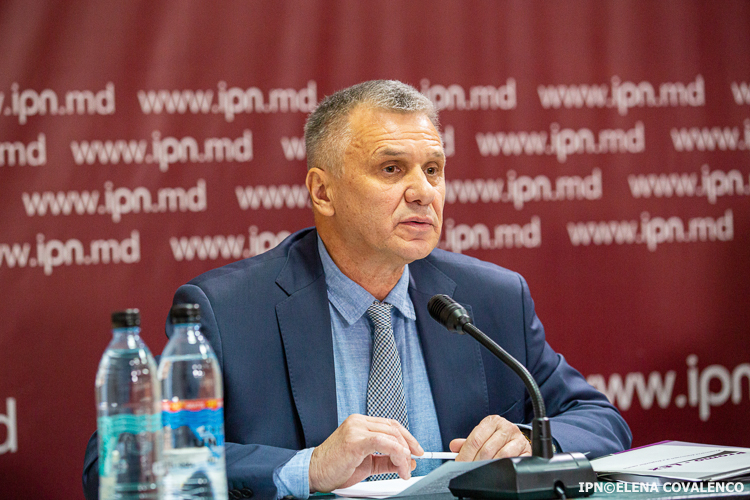
The ECHR decisions say that Russia is de-facto responsible for what is going on in the districts from the left side of the Nistru. But the surroundings Russia created through the war in Ukraine drastically reduced its possibilities of influencing things here, while the separatist regime in Tiraspol cannot exist without the support of its creators, Igor Boțan, the standing expert of IPN’s project, stated in a public debate staged by IPN News Agency.

According to the expert, the things are clear: the citizens are one thing and the regime is another thing. “With the citizens from Transnistria, we are allies. We no way antagonize them or make their life more difficult and harsher,” he stated.

As to the reintegration process, the expert said he agrees with his panel mate Gheorghe Bălan’s opinion that a fund should be created for reintegrating the usurped territory and that the authorities and the development partners should pursue a particle policy. He referred to Germany’s experience in reunifying its states. “The fund was projected for 30 years with US$2 trillion. Similar policies are pursued by South Korea,” stated Igor Boțan, noting that the costs are enormous in this case too.

“But we should have a policy for communicating with our citizens from the left side. The years-long policy pursued by Russia, which transformed the hydrocarbons into a weapon, leads to the increasing isolation of this country. The prospects of the Transnistrian administration turn gloomier, also due to the circumstances that force the Republic of Moldova to diversify the gas and electricity supply sources. All these taken together diminish Russia’s impact and influence on the region that, as we said, is 70% dependent on the Russian Federation economically. If Russia’s share in the supply of gas and other resources decreases, the prospects of the administration from the left side become depressing, while the policies promoted insistently by the Moldovan authorities have chances to be successful. Everything depends on the way in which we plan our actions for the population from Moldova’s eastern districts”.

The expert noted that given that Moldova’s potential is modest, the authorities should follow the recommendations of the development partners, especially those who take part in the “5+2” format. It would be a mistake for Moldova to ignore these recommendations. The efforts should be coordinated with the partners involved in this process as this is beneficial. Such an approach could be rejected by the citizens who want the problem to be solved swiftly, not yet by the persons who deal with the Transnistrian settlement professionally.

As to the cut in gas supplies, Igor Boțan said the given action shows that Russia is interested in destabilizing the Republic of Moldova and its capacity to support the separatist region with other instruments. “I think Russia’s influence in Transnistria diminished considerably,” he said.

In another development, the expert invoked “the argument of perspectives”: the Transnistrian region is considered the homeland of “service members and pensioners” with young people recruited to go to the “Russian field”, while on the right side, European integration policies are implemented, Moldova’s Europeans perspective is recognized by the international community and the country can cope with the problems with the support of the development partners.

The public debate entitled “Chisinau-Tiraspol relationship amid worsening crises: new opportunities and dangers” was the 266th installment of IPN’s project “Developing Political Culture through Public Debates” that is supported by the Hanns Seidel Foundation.


The Geneza Art Theater presents the show “Moon Sonata” /Geneza Art /at 06:00 PM/.

Over 50 young musicians from the Republic of Moldova and Romania are holding a classical music concert, under the baton of conductor Andrew Koehler from the USA /Epicrama Winery, Stauceni /at 07:00 PM/.

Yolka Band organizes a night of live music in gypsy jazz style at /Iusty Art Gallery /at 07:30 PM/.

The exhibition “Bessarabian Authors in the World” continues, inaugurated during the Diaspora Days 2026 /National Library of the Republic of Moldova /August 3-September 3/.

The exhibition “The Unknown Work of the Moldavian Masters” continues /Constantin Brancusi Exhibition Center/ /July 30-August 16/.

The personal exhibition Untitled by the artist Konstantin Benkovich continues, organized by the National Art Museum of Moldova, in partnership with the ALT Foundation /MNAM /July 30-August 30/.

The immersive exhibition continues, inspired by the mythology and mystical folklore of the Republic of Moldova, “The Forest”, created by Milen Chelea /Plai Gallery / July 23-August 6/.

The exhibition “Scent of Warm Bread. Bread in the Iron Age” continues /National Museum of History of Moldova /July 22 – September 4/.

The exhibition “Urban Archeology and the Hidden Memory of Chisinau” continues /National Museum of History of Moldova /July 17-November 30/.

The exhibition “The Thread of Identity! The traditional Romanian costume in book illustrations made by plastic artists from the Republic of Moldova” continues /BNRM /June 25-August 15/.

0 FacebookTwitterPinterestEmail


Igor Boțan: Russia’s possibilities in separatist region decreased drastically

The ECHR decisions say that Russia is de-facto responsible for what is going on in the districts from the left side of the Nistru. But the surroundings Russia created through the war in Ukraine drastically reduced its possibilities of influencing things here, while the separatist regime in Tiraspol cannot exist without the support of its creators, Igor Boțan, the standing expert of IPN’s project, stated in a public debate staged by IPN News Agency.

According to the expert, the things are clear: the citizens are one thing and the regime is another thing. “With the citizens from Transnistria, we are allies. We no way antagonize them or make their life more difficult and harsher,” he stated.

As to the reintegration process, the expert said he agrees with his panel mate Gheorghe Bălan’s opinion that a fund should be created for reintegrating the usurped territory and that the authorities and the development partners should pursue a particle policy. He referred to Germany’s experience in reunifying its states. “The fund was projected for 30 years with US$2 trillion. Similar policies are pursued by South Korea,” stated Igor Boțan, noting that the costs are enormous in this case too.

“But we should have a policy for communicating with our citizens from the left side. The years-long policy pursued by Russia, which transformed the hydrocarbons into a weapon, leads to the increasing isolation of this country. The prospects of the Transnistrian administration turn gloomier, also due to the circumstances that force the Republic of Moldova to diversify the gas and electricity supply sources. All these taken together diminish Russia’s impact and influence on the region that, as we said, is 70% dependent on the Russian Federation economically. If Russia’s share in the supply of gas and other resources decreases, the prospects of the administration from the left side become depressing, while the policies promoted insistently by the Moldovan authorities have chances to be successful. Everything depends on the way in which we plan our actions for the population from Moldova’s eastern districts”.

The expert noted that given that Moldova’s potential is modest, the authorities should follow the recommendations of the development partners, especially those who take part in the “5+2” format. It would be a mistake for Moldova to ignore these recommendations. The efforts should be coordinated with the partners involved in this process as this is beneficial. Such an approach could be rejected by the citizens who want the problem to be solved swiftly, not yet by the persons who deal with the Transnistrian settlement professionally.

As to the cut in gas supplies, Igor Boțan said the given action shows that Russia is interested in destabilizing the Republic of Moldova and its capacity to support the separatist region with other instruments. “I think Russia’s influence in Transnistria diminished considerably,” he said.

In another development, the expert invoked “the argument of perspectives”: the Transnistrian region is considered the homeland of “service members and pensioners” with young people recruited to go to the “Russian field”, while on the right side, European integration policies are implemented, Moldova’s Europeans perspective is recognized by the international community and the country can cope with the problems with the support of the development partners.

The public debate entitled “Chisinau-Tiraspol relationship amid worsening crises: new opportunities and dangers” was the 266th installment of IPN’s project “Developing Political Culture through Public Debates” that is supported by the Hanns Seidel Foundation.


The salary reform in the public sector needs to be reviewed before adoption in terms of its impact on the justice system, warn experts from the Institute for European Policies and Reforms. According to them, some provisions of the project developed by the Ministry of Finance could affect the financial independence of judges and prosecutors and may contradict the jurisprudence of the Constitutional Court, reports IPN.

The IPRE analysis aims at the effects of the project on judges, prosecutors, the Superior Council of Magistracy, the Superior Council of Prosecutors, as well as on the staff of the courts and the Prosecutor’s Office.

Experts believe that the general objectives of the reform – simplifying the wage system, strengthening the basic salary, reducing bonuses, and increasing transparency – are justified. However, the mechanisms proposed for the justice sector require adjustments before the law is adopted.

One of the main issues identified relates to the annual adjustment of the reference value used in calculating the salaries of judges and prosecutors. According to IPRE, the project ties this adjustment to the economic situation and the possibilities of the public budget, while the Constitutional Court has ruled that this should be mandatory and should take into account at least the average annual inflation rate.

Experts criticize the introduction of different salary reference values for judges and prosecutors who have passed the external evaluation. According to the note, the difference between the values of 4,700 and 6,200 lei could generate a wage gap of almost 32% between people with the same roles and responsibilities. IPRE argues that rewarding those who have passed the external evaluation could be applied only temporarily, through a separate allowance, not through permanent differences in the basic salary.

In this context, experts recommend the establishment of a mandatory mechanism for the annual adjustment of judges’ and prosecutors’ salaries, the review of wage differences related to external evaluation, and the involvement of the SCM and CSP in the process of determining roles and salary scales within the justice system.

0 FacebookTwitterPinterestEmail


1 IANUARIE, 2025
1 IANUARIE, 2025