

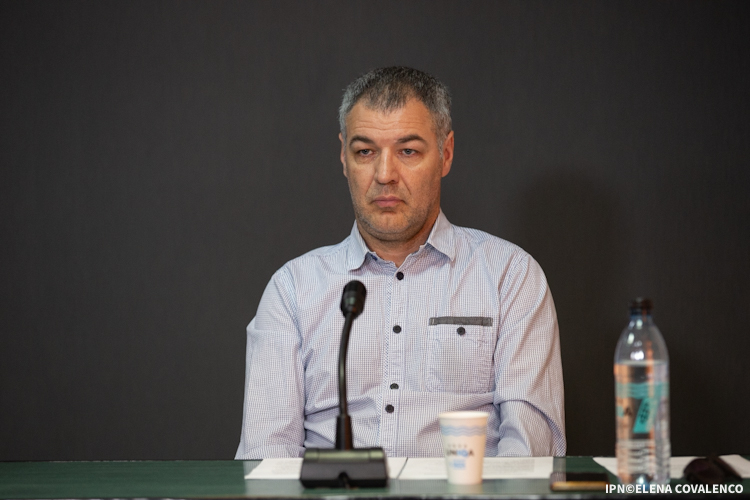
Octavian Țîcu: Stalinization – imbedding of a series of features typical of Soviet Union

Stalinization means the imbedding of a series of characteristics typical of the Soviet Union in states in which Stalin left his armies. In this regard, there is a debate on whether Stalin had or didn’t have a plan for Stalinizing Eastern Europe and what this process implied. Doctor of history Octavian Țîcu, university lecturer, developed the issue in a public debate  on Stalinization and de-Stalinization hosted by IPN.

Stalinization means the rule of one party, the Marxist-Leninist ideology, the suppression of the opposition, the repression and harsh elements of Stalinism, such as industrialization, collectivization and the cultural revolution. For many of the backward East-European states, these offers of Stalinism and the often imaginary successes of the Stalinist model were a find so that they assumed them, voluntarily as well. Evidently, the establishment of Stalinism was mainly prefigured by the effective occupation of Eastern Europe,” said Octavian Țîcu.

He noted that the Soviet Union was seen as the absolute holder of truth and no one could even think about challenging the supremacy of the Soviet Union. “It was an issue of sacredness, which offered the status of world tyranny to the Soviet Union,” noted the historian. He said that the influential Communist parties served as an instrument of Stalinization in some of the states. But in Eastern Europe, these parties were invented, reinvented and placed in a broader alliance, like national or people’s fronts.

“The Communists, together with a number of parties of the left, anti-fascist and often “democratic” ones, created broad government coalitions. Then they applied the so-called “strategy or tactic of the sausage”, which ment the removal of each of those elements up to the moment at which the Communist partied fully took over power,” stated Octavian Țîcu.

Asked about the effects of Stalinization in Eastern Europe, the doctor of history said that Eastern Europe by Stalinization became an integral part of the Communist bloc that Stalin regarded as a trophy of the Soviet Union in World War II. But this was simultaneously built as a zone of security, which was often invoked by Stalin against Western Europe. It was a bastion of Stalinist experiments of communization and inventorying of such states as the German Democratic Republic and the profound transformation of these societies as many of them, such as Romania, Bulgaria, Yugoslavia, Albania assumed the forced collectivization, profound transformation of society through the angle of this compilation between the state and Communist power, which had long-term effects on these states.

Octavian Țîcu noted that to realize and explain this global phenomenon of communism and Stalinization, one should bear in mind the concept of a universal church. “We often see resemblances between the expansion of communism at global level and the expansion of Christianity because the Soviet Union, Lenin and then Stalin managed to imbed in the Communists from all over the world the idea that they were not a sect, but a part of the universal church. The Communists, in their initial forms, were a kind of Christian missionaries who spread this ideology. The parties of the new type were monk orders that propagated proselytism all over the world,” said the historian.

As regards the signals that came lately from Moscow, concerning the rehabilitation of Stalin, Octavian Țîcu said that this is a message that is now disseminated also by Putin’s acolytes in the Republic of Moldova: political parties, different factions, agents of influence that went out and exhibited this thing at a moment that couldn’t have been antiicpated.

The public debate entitled “Stalinization and de-Stalinization in European context” was the 14th installment of IPN’s project “Impact of the Past on Confidence and Peace Building Processes” that is supported by the Hanns Seidel Foundation of Germany.


UEFA has expressed reservations about FIFA’s plan to create a commercial company that would manage the commercial rights of major competitions, including the World Cup. The organization believes that the initiative requires more clarity in terms of governance and transparency, reports IPN.

In a press release, UEFA stated that it is analyzing the proposal and that it must be examined by the national federations as well. The European body mentioned that the project raises questions about the management of the new structure and the distribution of financial benefits.

The reaction comes after FIFA announced its intention to establish FIFA Forward Enterprise (FFE), a subsidiary that would manage commercial activities and the organization of major competitions, including the World Cup and the Club World Cup.

FIFA intends to attract approximately 4.2 billion dollars by selling a minority stake of up to 20% to private investors. According to the organization, the funds will be used for the development of football, and FIFA will retain control over governance, competitions, and sporting decisions.

According to the British press, UEFA is expected to discuss the project with its 55 member federations at the end of this week, to establish a common position. Reservations about the initiative have also been expressed by the English Football Federation, CONCACAF, and the Asian Football Confederation, which have called for consultations and a transparent decision-making process.

0 FacebookTwitterPinterestEmail


Octavian Țîcu: Stalinization – imbedding of a series of features typical of Soviet Union

Stalinization means the imbedding of a series of characteristics typical of the Soviet Union in states in which Stalin left his armies. In this regard, there is a debate on whether Stalin had or didn’t have a plan for Stalinizing Eastern Europe and what this process implied. Doctor of history Octavian Țîcu, university lecturer, developed the issue in a public debate  on Stalinization and de-Stalinization hosted by IPN.

Stalinization means the rule of one party, the Marxist-Leninist ideology, the suppression of the opposition, the repression and harsh elements of Stalinism, such as industrialization, collectivization and the cultural revolution. For many of the backward East-European states, these offers of Stalinism and the often imaginary successes of the Stalinist model were a find so that they assumed them, voluntarily as well. Evidently, the establishment of Stalinism was mainly prefigured by the effective occupation of Eastern Europe,” said Octavian Țîcu.

He noted that the Soviet Union was seen as the absolute holder of truth and no one could even think about challenging the supremacy of the Soviet Union. “It was an issue of sacredness, which offered the status of world tyranny to the Soviet Union,” noted the historian. He said that the influential Communist parties served as an instrument of Stalinization in some of the states. But in Eastern Europe, these parties were invented, reinvented and placed in a broader alliance, like national or people’s fronts.

“The Communists, together with a number of parties of the left, anti-fascist and often “democratic” ones, created broad government coalitions. Then they applied the so-called “strategy or tactic of the sausage”, which ment the removal of each of those elements up to the moment at which the Communist partied fully took over power,” stated Octavian Țîcu.

Asked about the effects of Stalinization in Eastern Europe, the doctor of history said that Eastern Europe by Stalinization became an integral part of the Communist bloc that Stalin regarded as a trophy of the Soviet Union in World War II. But this was simultaneously built as a zone of security, which was often invoked by Stalin against Western Europe. It was a bastion of Stalinist experiments of communization and inventorying of such states as the German Democratic Republic and the profound transformation of these societies as many of them, such as Romania, Bulgaria, Yugoslavia, Albania assumed the forced collectivization, profound transformation of society through the angle of this compilation between the state and Communist power, which had long-term effects on these states.

Octavian Țîcu noted that to realize and explain this global phenomenon of communism and Stalinization, one should bear in mind the concept of a universal church. “We often see resemblances between the expansion of communism at global level and the expansion of Christianity because the Soviet Union, Lenin and then Stalin managed to imbed in the Communists from all over the world the idea that they were not a sect, but a part of the universal church. The Communists, in their initial forms, were a kind of Christian missionaries who spread this ideology. The parties of the new type were monk orders that propagated proselytism all over the world,” said the historian.

As regards the signals that came lately from Moscow, concerning the rehabilitation of Stalin, Octavian Țîcu said that this is a message that is now disseminated also by Putin’s acolytes in the Republic of Moldova: political parties, different factions, agents of influence that went out and exhibited this thing at a moment that couldn’t have been antiicpated.

The public debate entitled “Stalinization and de-Stalinization in European context” was the 14th installment of IPN’s project “Impact of the Past on Confidence and Peace Building Processes” that is supported by the Hanns Seidel Foundation of Germany.


A significant vegetation fire has broken out on the Greek island of Paros, one of the well-known tourist destinations in the Aegean Sea. According to euronews.ro, quoted by IPN, several localities have been evacuated, and firefighters are intervening on multiple fronts to limit the spread of the flames, as the strong wind complicates operations.

The fire broke out on Tuesday near the town of Kambi, in an area with low vegetation and waste. The Civil Protection Service of Greece has issued alerts through the 112 system for the residents of Agios Charalambos, Kambi, Bougados, Aneratzia, and Kamari, who were urged to move towards the coastal town of Aliki.

The intervention is carried out both on the ground and from the air, with the help of airplanes and helicopters. Additional firefighters and equipment have been brought from the neighboring islands of Naxos and Syros. The authorities have not reported any casualties or material damage, and the cause of the fire is under investigation.

Greece maintains a high level of alert for fires in several regions, due to high temperatures, dry vegetation, and strong winds.

In the meantime, wildfires continue in Spain and France, amidst a new heatwave. In France, 16 departments are under an orange heatwave alert, with temperatures forecasted to reach up to +41 degrees Celsius. In Gironde, authorities warn of the risk of rekindling hotspots due to the dry wind.

In Spain, the fire in Burgohondo, considered the largest in the country’s history, has destroyed over 43 thousand hectares of forest. Although thousands of evacuated people have returned to their localities, authorities warn that the situation remains unstable due to high temperatures.

0 FacebookTwitterPinterestEmail


1 IANUARIE, 2025
1 IANUARIE, 2025