

Readers of Japanese newspaper donate new computers to Ukrainian refugee children in Cărpineni

The children and young refugees from Ukraine staying in a Refugee Accommodation Centre (RAC) in Cărpineni, Hîncești district, will study online with the help of new computers procured through a donation on behalf of the Japanese newspaper Mainichi. Ten laptops and a color printer, offered through UNDP Moldova, were purchased from the money donated by the readers of the Japanese publication as part of their annual “Save the Children” campaign, IPN reports.

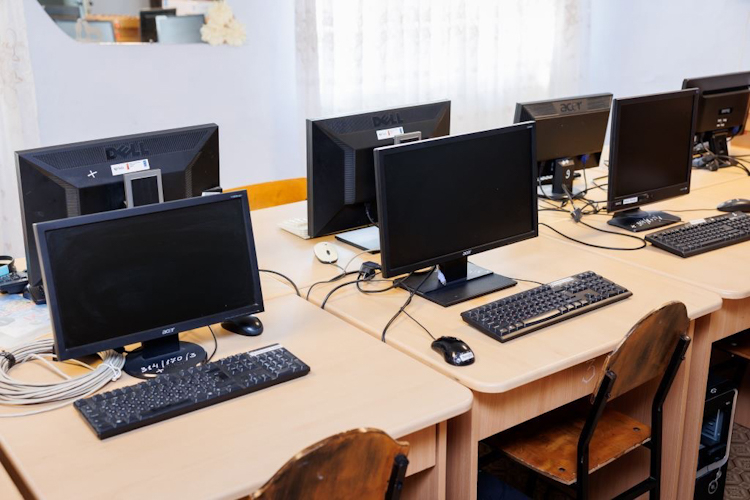
“One of the biggest needs we had was solved. In the computer room, the equipment was more of a decoration, I think it’s about 20 years old. Half of the computers didn’t even work, and the other half, although functional, couldn’t cope. They are old, worn out. Now, we can say that the students staying with us are provided with everything necessary to continue their studies, despite the war that separates them from their homes and schools,” said Tudor Țenu, the director of the Refugee Accommodation Centre, former boarding school of Cărpineni.

This RAC accommodates 69 people. Twenty-two residents are children, 10 of them students. In the current school year, 80 refugee students from Ukraine were enrolled in the Russian-language high school in the city of Hîncești, and daily transportation is provided for them. The other two school-age children are learning online with their schools in Ukraine.

“The donation is an extraordinary investment in the education and well-being of these children, and we are grateful that someone thought of us. For these children, the computer means practically everything, and lessons, and communication with colleagues, and fun. My nephew is fond of IT, we enrolled him in a specialized online course, but in the absence of a computer he could not continue these studies. Yes, we manage with what we have, but it’s not at all convenient for him to learn or do his homework on the tablet, not so much on the phone,” said Olga Șust, Igor’s grandmother, a third-grade student at a school in Mykolaiv, Ukraine.

The 10 computers and the printer were donated so that the youth and children resident at the center can continue their studies online, but also to use them in various online extracurricular activities in safety and convenience.

Part of the donation of the Japanese publication Mainichi are hygiene and cleaning products offered to the other refugee placement center in Cărpineni. Three such centers operate in Hîncești district, two being in Cărpineni.

Between May and July 2022, a team of journalists from the Japanese newspaper Mainichi visited UNDP partner localities, including Cărpineni, to report on the experience of refugees from Ukraine and their integration into the host communities in Moldova. The visit was accompanied by a campaign to collect donations from Mainichi readers.

Since the beginning of the war in Ukraine, the Moldovan authorities have established 136 RAC for refugees throughout the country. In July 2023, 53 centers were functional and accommodated 2079 refugees, children being 37%, according to data from the National Social Assistance Agency.


Readers of Japanese newspaper donate new computers to Ukrainian refugee children in Cărpineni

A commercial ship under the Liberian flag was involved in a naval incident that occurred in the Exclusive Economic Zone...

Acest material este disponibil doar pe bază de abonament.
Abonează-te pentru a avea acces la mai multe materiale și funcționalități exclusive!

0 FacebookTwitterPinterestEmail


Readers of Japanese newspaper donate new computers to Ukrainian refugee children in Cărpineni

The children and young refugees from Ukraine staying in a Refugee Accommodation Centre (RAC) in Cărpineni, Hîncești district, will study online with the help of new computers procured through a donation on behalf of the Japanese newspaper Mainichi. Ten laptops and a color printer, offered through UNDP Moldova, were purchased from the money donated by the readers of the Japanese publication as part of their annual “Save the Children” campaign, IPN reports.

“One of the biggest needs we had was solved. In the computer room, the equipment was more of a decoration, I think it’s about 20 years old. Half of the computers didn’t even work, and the other half, although functional, couldn’t cope. They are old, worn out. Now, we can say that the students staying with us are provided with everything necessary to continue their studies, despite the war that separates them from their homes and schools,” said Tudor Țenu, the director of the Refugee Accommodation Centre, former boarding school of Cărpineni.

This RAC accommodates 69 people. Twenty-two residents are children, 10 of them students. In the current school year, 80 refugee students from Ukraine were enrolled in the Russian-language high school in the city of Hîncești, and daily transportation is provided for them. The other two school-age children are learning online with their schools in Ukraine.

“The donation is an extraordinary investment in the education and well-being of these children, and we are grateful that someone thought of us. For these children, the computer means practically everything, and lessons, and communication with colleagues, and fun. My nephew is fond of IT, we enrolled him in a specialized online course, but in the absence of a computer he could not continue these studies. Yes, we manage with what we have, but it’s not at all convenient for him to learn or do his homework on the tablet, not so much on the phone,” said Olga Șust, Igor’s grandmother, a third-grade student at a school in Mykolaiv, Ukraine.

The 10 computers and the printer were donated so that the youth and children resident at the center can continue their studies online, but also to use them in various online extracurricular activities in safety and convenience.

Part of the donation of the Japanese publication Mainichi are hygiene and cleaning products offered to the other refugee placement center in Cărpineni. Three such centers operate in Hîncești district, two being in Cărpineni.

Between May and July 2022, a team of journalists from the Japanese newspaper Mainichi visited UNDP partner localities, including Cărpineni, to report on the experience of refugees from Ukraine and their integration into the host communities in Moldova. The visit was accompanied by a campaign to collect donations from Mainichi readers.

Since the beginning of the war in Ukraine, the Moldovan authorities have established 136 RAC for refugees throughout the country. In July 2023, 53 centers were functional and accommodated 2079 refugees, children being 37%, according to data from the National Social Assistance Agency.


Non-domestic consumers in the Republic of Moldova will be able to purchase electricity through an electronic platform launched by the Romanian Commodity Exchange EST Moldova. According to the entity, the new mechanism allows licensed suppliers to participate in procurement procedures in a competitive and transparent framework, reports IPN.

The platform, called the Electric Energy Ring within the available market (Retail), aims to facilitate the meeting of demand with supply, through clear rules and equal treatment for participants. The Ministry of Energy specifies that the mechanism will contribute to the implementation of more efficient and transparent procurement procedures.

According to BRM EST, similar platforms have been used for over two decades in several European Union states, and the new tool responds to the requests of consumers from the Republic of Moldova.

Currently, BRM EST is the only functional commodity exchange in the Republic of Moldova and manages electronic platforms for trading natural gas, petroleum products, construction materials, and other fungible goods.

0 FacebookTwitterPinterestEmail


1 IANUARIE, 2025
1 IANUARIE, 2025