

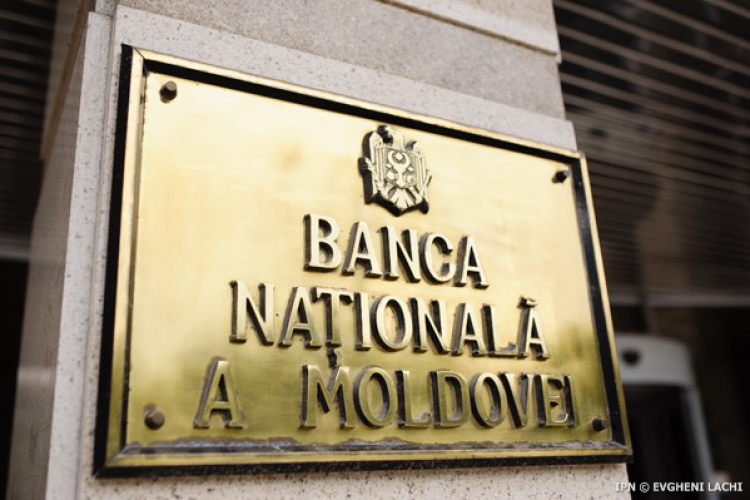
NBM lowers base rate to 4.25%

The executive board of the National Bank of Moldova today set the base rate on the main short-term monetary policy operations at 4.25% annually, down from 4.75%. At the same time, the interest rate on overnight loans was reduced from 6.75% to 6.25%, and the rate on overnight deposits was lowered from 2.75% to 2.25%.

The NBM has maintained reserve requirements for Moldovan lei and non-convertible currencies at 33% of the calculation basis. Similarly, reserve requirements for freely convertible currencies has been kept unchanged at 43%.

Also today, the NBM board approved the latest monthly Inflation Report, to be published on February 13.

“In December 2023, inflation was within the target range for the third consecutive month. Today’s decision of the NBM contributes to the consolidation of this performance, further stimulating aggregate demand, currently disinflationary, by encouraging consumption, balancing the national economy and anchoring inflationary expectations, among other measures”, the National Bank said in a press release.

The central bank says it is closely following the inflationary process, assessing the associated risks and uncertainties, and future decisions of the Executive Board will be aimed at maintaining inflation within ±1.5 percentage point of the 5.0 percent target, a level considered optimal for economic growth in the medium term.


NBM lowers base rate to 4.25%

The executive board of the National Bank of Moldova today set the base rate on the main short-term monetary policy operations at 4.25% annually, down from 4.75%. At the same time, the interest rate on overnight loans was reduced from 6.75% to 6.25%, and the rate on overnight deposits was lowered from 2.75% to 2.25%.

The NBM has maintained reserve requirements for Moldovan lei and non-convertible currencies at 33% of the calculation basis. Similarly, reserve requirements for freely convertible currencies has been kept unchanged at 43%.

Also today, the NBM board approved the latest monthly Inflation Report, to be published on February 13.

“In December 2023, inflation was within the target range for the third consecutive month. Today’s decision of the NBM contributes to the consolidation of this performance, further stimulating aggregate demand, currently disinflationary, by encouraging consumption, balancing the national economy and anchoring inflationary expectations, among other measures”, the National Bank said in a press release.

The central bank says it is closely following the inflationary process, assessing the associated risks and uncertainties, and future decisions of the Executive Board will be aimed at maintaining inflation within ±1.5 percentage point of the 5.0 percent target, a level considered optimal for economic growth in the medium term.


The authorities have restricted the use of drinking water and surface water for non-essential activities, such as street washing or pool filling. Water will be prioritized for the essential needs of the population. The decisions were approved by the National Crisis Management Commission, against the backdrop of risks generated by the low level of water in the Dniester, reports IPN.

At the same time, the capture of water from the Dniester River and the irrigation of agricultural lands will be allowed exclusively during the night, between the hours of 09:00 PM and 06:00 AM, with priority for horticultural crops. The irrigation process will be monitored by the competent authorities, and in sectors where the water level will reach critical thresholds, the Ministry of Environment may temporarily suspend the captures.

To ensure the continuity of water supply, local authorities will activate reserve wells and, as appropriate, will use available funds to put them into operation. At the same time, public service operators will intensify the monitoring of water quality at the intake points designated for drinking water supply, through additional sampling and laboratory analysis.

According to the decision of the CNMC, Apa-Canal Chisinau, in coordination with the competent local and central authorities, will undertake the necessary measures to maintain the water supply of the city of Chisinau. Depending on the evolution of the situation, the General Inspectorate for Emergency Situations will prepare logistical capacities for the distribution of potable water using mobile cisterns in the affected localities.

Also, the Commission has decided to reduce by at least 20% the water consumption of industrial economic operators whose activities are not essential for food production, the medical sector, or public health.

0 FacebookTwitterPinterestEmail


1 IANUARIE, 2025
1 IANUARIE, 2025