

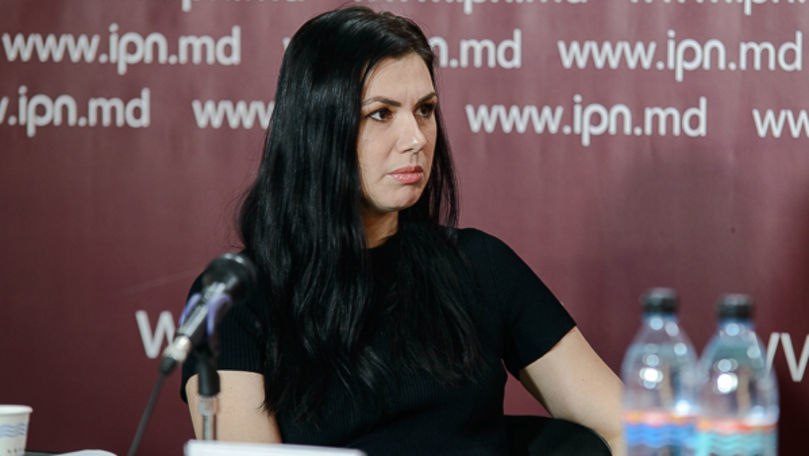
Cristina Ciubotaru: The Plahotniuc file, examined very quickly, raises legitimate questions

Resonance files related to corruption acts must be examined promptly, but this speed should not seem the result of political pressure. This is the statement of the anti-corruption expert Cristina Ciubotaru, made in the context of the criticism brought to the way the file in which Vlad Plahotniuc is targeted is examined. In an interview in the December monthly bulletin of the Association for Foreign Policy, conducted together with Friedrich-Ebert-Stiftung, the analyst emphasizes that the statements of some politicians, who boast in such situations about the speed of the process, seriously undermine trust in justice, reports IPN.

“The crisis of judges and temporary transfers between lower and higher courts lead, in some cases, to delays and retrials of cases, and in others to unusual accelerations, fueled by untempered political discourses. Under these conditions, political interest cannot be excluded from either slowness or haste. The case of Vladimir Plahotniuc, recently examined at a very fast pace, raises legitimate questions, considering that the alleged facts are over 10 years old and concern extremely complex cases, which, if delayed, can be prescribed. It is true that major corruption cases must be examined promptly – “justice delayed is justice denied”, a principle also enshrined in the ECHR jurisprudence -, but the speed should not seem to be the result of political pressure. The statements of some politicians who boast about the speed of the process in which the defendant does not manage “even to read his file” seriously undermine confidence in the independence of justice”, declared Cristina Ciubotaru in an interview.

The expert also speaks about the possible existence of duplicitous actions, referring in this regard to the “Kuliok” case in which the former head of state Igor Dodon is targeted.

“At the opposite pole, the Igor Dodon file, examined by the Supreme Court of Justice, was restarted from scratch after almost three years, due to the replacement of a temporarily transferred judge. Although the restart can be procedurally justified, the inconsistency of changing the judging panels and the political context raise questions. Over the course of the three-year examination, all three judges from the initial panel were gradually replaced, without this having previously triggered the restart of the procedures. The political context also raises questions: Igor Dodon is the leader of the PSRM, a party with which PAS governed in alliance during the period 2019–2021 and with which a new alliance was not excluded even after the parliamentary elections in the autumn of 2025. Under these circumstances, the changes in speed in the examination of the file may have several explanations, including some extrajudicial ones”, added Cristina Ciubotaru.

The expert specifies that the authorities must constantly analyze these sensitive issues, which perpetually arouse suspicions in society.

“What is certain is that the rotation of judges remains one of the most effective methods of delaying cases, especially high-profile ones. This was also demonstrated in the recent documentary made by Recorder journalists about the captured justice system in Romania. Therefore, the discussion about the speed with which major corruption cases are examined in the Republic of Moldova becomes even more sensitive, as those responsible for the ‘gearbox’ of justice should understand very well how these selective accelerations and brakes are publicly interpreted”, further emphasizes Cristina Ciubotaru.


The Transylvania International Film Festival begins, the VI edition, with film screenings, meetings with filmmakers, masterclasses and workshops dedicated to cinema enthusiasts (24-26 July) /Artcor, “Odeon” Cinema and “Loteanu” Cineplex /at 04:30 PM/.

The films “Was It or Wasn’t It?” and “Orphan” will be screened as part of the 6th Transylvania International Film Festival /Cineplex Loteanu /at 05:00 PM/; 07:15 PM/.

The opening gala of the 6th Transylvania International Film Festival will take place, featuring a screening of the film “3 Days in September” /Odeon Cinema /at 07:00 PM/.

Romanian short films are being screened as part of the 6th Transylvania International Film Festival /Artcor /at 08:30 PM/.

The exhibition “Scent of Warm Bread. Bread in the Iron Age” continues /National Museum of History of Moldova /July 22 – September 4/.

The exhibition “Urban Archeology and the Hidden Memory of Chisinau” continues /National Museum of History of Moldova /July 17-November 30/.

The contemporary art exhibition-competition continues: The municipal salon within the “Te salut, Chisinau!” Festival, the VI edition, dedicated to the 590th anniversary of the city /Constantin Brancusi Exhibition Center /July 8-26/.

The documentary exhibition “Echo from the past, for present and future” continues, dedicated to the memory of the victims of Stalinist deportations and one of the most tragic episodes in the history of Bessarabia /BNRM /July 3-August 3/.

The exhibition “The Thread of Identity! The traditional Romanian costume in book illustrations made by plastic artists from the Republic of Moldova” continues /BNRM /June 25-August 15/.

The graphic exhibition by Lica Sainciuc continues, opened as part of the Creative Industries Festival /Lutnita Gallery /June 5 – July 31/.

0 FacebookTwitterPinterestEmail


Cristina Ciubotaru: The Plahotniuc file, examined very quickly, raises legitimate questions

Resonance files related to corruption acts must be examined promptly, but this speed should not seem the result of political pressure. This is the statement of the anti-corruption expert Cristina Ciubotaru, made in the context of the criticism brought to the way the file in which Vlad Plahotniuc is targeted is examined. In an interview in the December monthly bulletin of the Association for Foreign Policy, conducted together with Friedrich-Ebert-Stiftung, the analyst emphasizes that the statements of some politicians, who boast in such situations about the speed of the process, seriously undermine trust in justice, reports IPN.

“The crisis of judges and temporary transfers between lower and higher courts lead, in some cases, to delays and retrials of cases, and in others to unusual accelerations, fueled by untempered political discourses. Under these conditions, political interest cannot be excluded from either slowness or haste. The case of Vladimir Plahotniuc, recently examined at a very fast pace, raises legitimate questions, considering that the alleged facts are over 10 years old and concern extremely complex cases, which, if delayed, can be prescribed. It is true that major corruption cases must be examined promptly – “justice delayed is justice denied”, a principle also enshrined in the ECHR jurisprudence -, but the speed should not seem to be the result of political pressure. The statements of some politicians who boast about the speed of the process in which the defendant does not manage “even to read his file” seriously undermine confidence in the independence of justice”, declared Cristina Ciubotaru in an interview.

The expert also speaks about the possible existence of duplicitous actions, referring in this regard to the “Kuliok” case in which the former head of state Igor Dodon is targeted.

“At the opposite pole, the Igor Dodon file, examined by the Supreme Court of Justice, was restarted from scratch after almost three years, due to the replacement of a temporarily transferred judge. Although the restart can be procedurally justified, the inconsistency of changing the judging panels and the political context raise questions. Over the course of the three-year examination, all three judges from the initial panel were gradually replaced, without this having previously triggered the restart of the procedures. The political context also raises questions: Igor Dodon is the leader of the PSRM, a party with which PAS governed in alliance during the period 2019–2021 and with which a new alliance was not excluded even after the parliamentary elections in the autumn of 2025. Under these circumstances, the changes in speed in the examination of the file may have several explanations, including some extrajudicial ones”, added Cristina Ciubotaru.

The expert specifies that the authorities must constantly analyze these sensitive issues, which perpetually arouse suspicions in society.

“What is certain is that the rotation of judges remains one of the most effective methods of delaying cases, especially high-profile ones. This was also demonstrated in the recent documentary made by Recorder journalists about the captured justice system in Romania. Therefore, the discussion about the speed with which major corruption cases are examined in the Republic of Moldova becomes even more sensitive, as those responsible for the ‘gearbox’ of justice should understand very well how these selective accelerations and brakes are publicly interpreted”, further emphasizes Cristina Ciubotaru.


Young specialists in the field of culture can submit their applications for employment and allocation in relevant public institutions. The Ministry of Culture announces that they can benefit from unique allowances of up to 120 thousand lei if they will take up the vacant positions announced by the institution, reports IPN.

The list of available positions includes roles such as artistic director, conductor, choreographer, actor, director, accompanist, museographer, librarian, and sound operator. These are distributed in public cultural institutions across the country.

Graduates of higher education institutions in the field can receive a grant of 120 thousand lei, and those of colleges – 90 thousand lei. The payment is made over the first three years of activity, in three equal installments.

For allocation, young people must submit a file that includes their identification document, the allocation request, educational documents, and other necessary papers. Graduates who have studied abroad must also present the certificate of recognition and equivalence of studies.

Applications can be submitted until August 21, in physical or electronic format. The list published by the Ministry of Culture includes 110 vacant positions in the public cultural institutions of the local public administration authorities and the Ministry of Culture.

0 FacebookTwitterPinterestEmail


1 IANUARIE, 2025
1 IANUARIE, 2025