

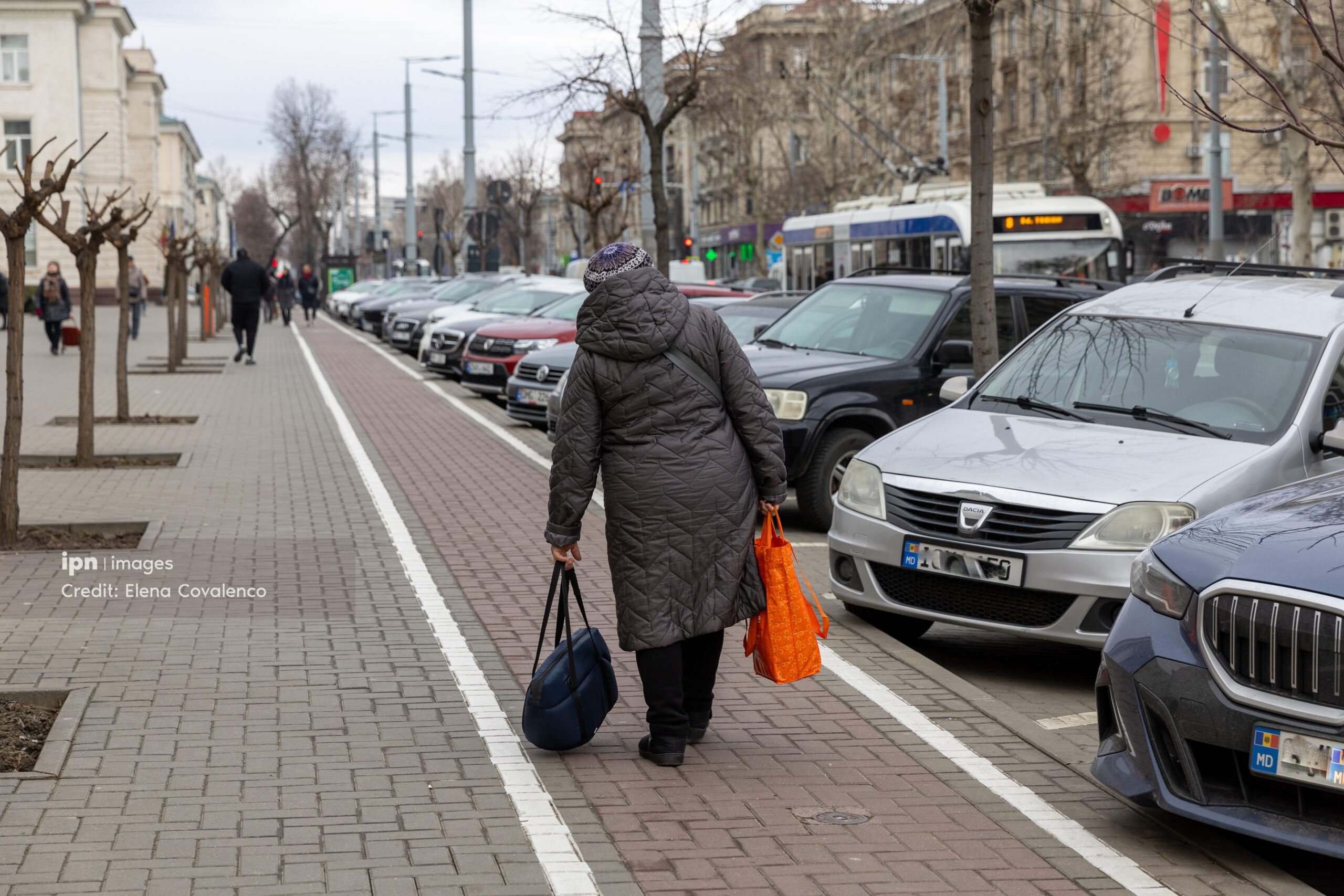
“Even worse than this was only in the ’90s” – economist on the state of Moldova’s economy

The Gross Domestic Product of the Republic of Moldova has increased by only 0.4% in the last five years, and the maximum growth of 1% forecasted for this year essentially means economic stagnation, says Veaceslav Ionita, an expert in economic policies at IDIS “Viitorul”. According to him, “it was only worse in the ’90s, during the collapse of the Soviet system”, reports IPN.

In the show “Economic Analysis with Veaceslav Ionita”, the expert emphasized that the current recession is not an isolated phenomenon, but reflects the structural weakness of the Moldovan economy, which, for many years, has failed to overcome fundamental problems.

Over the last five years, industrial production has decreased by 1.3%, and agriculture – by 2.8%. During the same period, exports fell by nearly 500 million dollars, and the negative trend continues.

“Today we export raw materials and import finished products. From oil exporters, we have become sunflower exporters and oil importers. The agricultural balance has become negative, something that hasn’t happened for decades,” the economist declared.

The recession is also accompanied by a significant decrease in the employed population, which reached 808 thousand people in the second half of 2024 – the lowest employment level ever recorded in the Republic of Moldova.

The rate of absolute poverty – which reflects the proportion of the population that cannot ensure a minimum standard of living – has increased across the country, most notably in the south of the Republic of Moldova. If ten years ago the poverty rate in the south was 31%, today it has climbed to almost 50%. In the north, it has increased from 26.5% to 32.2%, and in Chisinau, from 7% to 11%.

“Moldova has the highest gas price in Eastern Europe, and the population has truly understood what energy poverty means,” Ionita further stated.

According to the study “The 100 Most Pressing Problems of the Republic of Moldova in 2024”, conducted by the Institute for Development and Social Initiatives (IDIS) “Viitorul”, three out of ten Moldovans live on the brink of absolute poverty, and in rural areas the poverty rate exceeds 45%.

With an inflation rate of over 10% for utilities, the citizens of Moldova pay the highest proportion of their income for basic necessities in the region. If in 2024, 63% of respondents believed that a salary of at least 15,000 lei was necessary to stay in the country, by 2025, 81% of those interviewed stated the same thing.


Former deputy Fiodor Gagauz announces that he will run for the position of Governor of Gagauzia. He says he made this decision after consulting with the residents of the region and declares himself ready to assume the responsibility of the role.

In a press conference at IPN, Fiodor Gagauz mentioned that the upcoming elections for the position of governor and for the People’s Assembly of Gagauzia will play an important role in defining the future of the region and should represent a moment of renewal and responsible choice.

“Today is not the time to stand aside. I am convinced that every capable person who can benefit their people must take responsibility. That is why, after serious reflections and consultations with the residents of the region, I decided to run for the position of Governor of Gagauzia,” the politician declared.

According to Fiodor Gagauz, the region needs people who not only talk about problems, but are capable of proposing solutions, defending the interests of autonomy, ensuring the respect of its competencies, and building constructive relationships with central authorities.

“It is a conscious decision and a great responsibility that I am ready to take on. I do it not for the sake of political struggle, but because I am convinced that today Gagauzia needs peace, unity and development more than ever”, said Fiodor Gagauz.

In his opinion, in recent years Gagauzia has been marked by political confrontations between the central authorities and the region’s leadership, which would have led to the limitation of the region’s competencies and its political isolation. He believes that a new stage in the development of Gagauzia is necessary.

Note: IPN Agency offers the right of reply to those who consider themselves targeted in the news made from the statements of the organizers of this press conference, including by facilitating the organization of another press conference under similar conditions.


0 FacebookTwitterPinterestEmail


“Even worse than this was only in the ’90s” – economist on the state of Moldova’s economy

The Gross Domestic Product of the Republic of Moldova has increased by only 0.4% in the last five years, and the maximum growth of 1% forecasted for this year essentially means economic stagnation, says Veaceslav Ionita, an expert in economic policies at IDIS “Viitorul”. According to him, “it was only worse in the ’90s, during the collapse of the Soviet system”, reports IPN.

In the show “Economic Analysis with Veaceslav Ionita”, the expert emphasized that the current recession is not an isolated phenomenon, but reflects the structural weakness of the Moldovan economy, which, for many years, has failed to overcome fundamental problems.

Over the last five years, industrial production has decreased by 1.3%, and agriculture – by 2.8%. During the same period, exports fell by nearly 500 million dollars, and the negative trend continues.

“Today we export raw materials and import finished products. From oil exporters, we have become sunflower exporters and oil importers. The agricultural balance has become negative, something that hasn’t happened for decades,” the economist declared.

The recession is also accompanied by a significant decrease in the employed population, which reached 808 thousand people in the second half of 2024 – the lowest employment level ever recorded in the Republic of Moldova.

The rate of absolute poverty – which reflects the proportion of the population that cannot ensure a minimum standard of living – has increased across the country, most notably in the south of the Republic of Moldova. If ten years ago the poverty rate in the south was 31%, today it has climbed to almost 50%. In the north, it has increased from 26.5% to 32.2%, and in Chisinau, from 7% to 11%.

“Moldova has the highest gas price in Eastern Europe, and the population has truly understood what energy poverty means,” Ionita further stated.

According to the study “The 100 Most Pressing Problems of the Republic of Moldova in 2024”, conducted by the Institute for Development and Social Initiatives (IDIS) “Viitorul”, three out of ten Moldovans live on the brink of absolute poverty, and in rural areas the poverty rate exceeds 45%.

With an inflation rate of over 10% for utilities, the citizens of Moldova pay the highest proportion of their income for basic necessities in the region. If in 2024, 63% of respondents believed that a salary of at least 15,000 lei was necessary to stay in the country, by 2025, 81% of those interviewed stated the same thing.


Approximately 70% of the town halls in the Republic of Moldova are firmly committed to the voluntary amalgamation process. The announcement was made by the Secretary General of the Government, Alexei Buzu. According to the official, the voluntary amalgamation process of localities ends on July 31, and the deadline will not be extended, reports IPN.

Alexei Buzu pointed out that most local authorities have already taken concrete steps to join the process, and by the deadline, clarification is expected regarding the situation of the other town halls as well.

“85% of all town halls in the country have made decisions to amalgamate. Town halls that are already firmly engaged in the process are 70%. We will see what will happen by the end of the month, but the signal is encouraging: a good part of the local elected officials have chosen the formula of voluntary amalgamation”, declared the Secretary General of the Government during the “Cabinetul din Umbră” show on Jurnal TV.

The official emphasized that voluntary amalgamation is just the first stage of local public administration reform, the goal being to reduce excessive fragmentation and create stronger and more efficient municipalities. “Amalgamation is just one stage of the reform. The mere fact that we will have larger municipalities is an asset. We have a problem with the fragmentation of municipalities. 87% of municipalities currently administer localities with less than 3 thousand inhabitants”, explained Alexei Buzu.

According to him, the reform will be accompanied by measures of financial decentralization and strengthening of the administrative capacities of the new municipalities. “We will also have interventions related to financial decentralization. We will provide levers and resources for these municipalities. We will strengthen local teams. Half of all retirees from the public system are in municipalities. We will not be able to manage serious projects if we do not have administrative competencies”, said the Secretary General of the Government.

0 FacebookTwitterPinterestEmail


1 IANUARIE, 2025
1 IANUARIE, 2025